Showing posts with label single-family homes. Show all posts

Thursday, March 17, 2022

Top Three 2022 Real Estate Investment Trends

 Today's housing market is booming and prices are continuing to rise. The National Associations of Realtors has reported that the median price of existing single-family homes has risen by double-digits in 78% of the tracked markets. Real estate investing is also increasing, and investors depend on key trends in the market. Here are the top three trends for 2022.


1. The Continuation of Historically Low-Interest Rates

Even with talk that the interest rates will rise next year, they still will be at historical record lows.  David Bianco, chief investment officer for the Americas at DWS Group, expects two quarter-point rate hikes next year. This should not be too much of a concern due to the 30-year Treasury bond is still holding at less than 2% and the 30-year fixed mortgage rates are a little above 3%. These lows will keep the housing market booming.

2. The Emergence of Alternate Property Sectors

With the expansions due to the hot market, investors are keeping an eye out for these opportunities. Investors are watching for single-family build-to-rent residential opportunities. Many homebuyers are still shying away from the cities after the pandemic scare. Due to this shift, build-to-rent properties are becoming popular. According to industry research, single-family homes built between 2019 and 2020 for rent increased 30%. "Last-mile industrial real estate has also become a big interest. Online shopping has grown especially during stay-at-home orders making warehouses a lucrative investment. Another popular opportunity currently is multi-asset real estate in the South East. Multi-family communities have steadily gained popularity.

3. The Sunbelt is Positioned for Further Appreciation

The Sunbelt includes cities that are located in the southern third of the country. The area is seeing a very strong demand for real estate. This strong demand is due to population growth, business-friendly local governments, and milder climates. Census data reports that the Sunbelt is home to 10 of the 15 fastest-growing cities in the U.S. States such as Tennessee, North Carolina, Texas, and Georgia are business-friendly which attracts higher real estate prices. A warmer climate allows for fewer maintenance expenses as well.

If you are a home buyer or an investor looking for real estate, don't do it alone. Contact a Realtor who can help you purchase a home or an investment property.

Click Here For the Source of the Information.

Saturday, January 29, 2022

Huge Gains in Housing Starts From October 2021 to November 2021

 The U.S.Department of Housing and Urban Development and the U.S. Census Bureau reported an 11.8% rise month-over-month to a seasonally adjusted rate of 1.68 million units from October 2021 to November 2021. The increase showed a double-digit gain caused by the low housing inventory and rising builder confidence. Single-family homes saw an increase of 11.3% to 1.17 million units and multifamily new construction saw an increase of 12.9% to 506,000 units.

“Breaking an eight-year trend, in recent months there have been more single-family homes under construction than multifamily units,” National Association of Home Builders chief economist Robert Dietz said in a statement. “Moreover, despite some cooling earlier this year, the continued strength of single-family construction in 2021 means there are now 28% more single-family homes under construction than a year ago. These gains mean single-family completions will increase in 2022, bringing more inventory to market despite a 19% year-over-year rise in construction material costs and longer construction times.”

"Mirroring gains in the HMI reading of builder sentiment, single-family housing starts accelerated near the end of 2021 and are up 15.2% year-to-date as demand for new construction remains strong due to a lean inventory of resale housing,” Chuck Fowke the chairman of the NAHB said in a statement.

“The bottom line is we need more homes and it will take time to reduce the housing stock ‘debt’ in the face of growing demand,” First American deputy chief economist Odeta Kushi said in a statement. “But today’s housing starts report, in combination with a positive builder’s sentiment report, sends an optimistic message about the housing market as we enter 2022.”

Click Here For the Source of the Information.

Monday, December 27, 2021

2021 Third Quarter Sees A Strong Boost In the Vacation Home Market


The NAHB Home Building Geography Index (HBGI) released in December 2021 shows an increase in permits for second homes. The counties in the country with a high ratio of vacation homes have seen a big spike.

“Over the last year, second-home markets have increased their market shares, due to increases in hybrid work arrangements, early retirements and wealth gains in housing and stocks,” said NAHB Chief Economist Robert Dietz.

New construction growth has taken off in the second home market. The growth rate for single-family homes in the second home market was 36.1%, this is a rise compared to the non-second home market average of 23.2%.


In the past year, the housing market for single-family homes has been booming in suburban areas. The report shows that the higher density markets are coming back. This is not the case in the multifamily construction sector. Permits for multifamily projects were higher in smaller cities and rural areas than in larger metropolitan areas.

“As more workers transitioned back to the workplace, there was a rebound for housing production in urban core markets, as well as ongoing growth in exurban areas,” said NAHB Chairman Chuck Fowke. “And while builders are still grappling with affordability headwinds in both small and large markets, this rebound in housing production in some higher density markets where building is more costly highlights the need for policymakers to reduce housing supply barriers that are driving up home prices.”

“Although all geographies are showing construction growth, the suburban shift is less pronounced than we’ve seen in prior quarters as some higher-density markets see a rebound even as exurbs continue to expand,” said NAHB Chief Economist Robert Dietz.

Single-family permit growth data for the third quarter of 2019 and 2020 was 5.6% in large metro communities while it was 12.3% in the suburbs. The current report for the fourth quarter of 2020 and 2021 shows an increase of 21.1% in large metro markets and a 30.8% increase in the suburbs.

For multifamily permits, the 2020 and 2021 data show they fell from 40.5% to 37.9% in higher density markets while they rose from 24.9% to 37.2% in the smaller communities. This is a large shift in this market. Historically, year-to-year changes in multifamily market share are usually slow to develop and rarely move more than one percentage point higher or lower. This makes these latest year-over-year numbers noteworthy.

Click Here For the Source of the Information.

Friday, October 29, 2021

Summer Saw an Increase in Private Residential Spending


The strong housing market and an uptick in the US economy are encouraging homeowners to spend money. According to NAHB analysis of Census Construction Spending, there was a 0.4% increase in the month of August in private residential construction spending. This took the seasonally adjusted annual rate to $786.6 billion. The data reported shows a 24.3% increase in total private residential construction spending over a year ago.

There was a dip in spending on single-family and multifamily improvements in July but it jumped back up 2.5% in August. This might have been due to such issues with building material supply chains and labor challenges. Material prices such as lumber are also skyrocketing.

The National Association of Home Builders construction spending index saw solid growth in single-family construction and home improvement. The data also reports a rebound in new multifamily construction spending. Private nonresidential construction spending was reported at a seasonally adjusted annual rate of $455.6 billion in August.

Click Here For the Source of the Information.

Monday, August 23, 2021

Home Buyers Will Need Patience When Purchasing a Home in 2021


The current housing market is booming which is good news but is it for buyers? Homebuyers are facing many obstacles in this seller's market. In fact, it is one of the most competitive markets we have seen for homebuyers recently. According to the National Association of Realtors (NAR), homes that are for sale are getting around 4.8 offers per sale! This is due to the lack of inventory in the current housing market.

“The housing market is still relatively under-supplied, and buyers can’t buy what’s not for sale. Relative to what we saw in 2017 to 2019, March 2021 was still roughly 117,000 new listings lower, adding to the pre-existing early-year gap of more than 200,000 fresh listings that would typically have come to market in January or February. Despite this week’s gain from a year ago, we’re 19 percent below the new seller activity that we saw in the same week in 2019,” says Danielle Hale, Chief Economist at realtor.com.

Many are blaming the pandemic for lack of inventory because sellers are scared to have potential buyers in their homes but this is not the case. The main cause is the shortage of new construction of single-family homes. A chart which shows the completed single-family homes per decade shows a dramatic decrease from 2000-2009 to 2010-2019. From 2000 - 2009 12.6 million single-family homes were constructed and from 2010 - 2019 only 6.5 million single-family homes were constructed.

“Even before the COVID-19 pandemic and current recession, the housing market was facing a substantial supply shortage and that deficit has grown. In 2018, we estimated that there was a housing supply shortage of approximately 2.5 million units, meaning that the U.S. economy was about 2.5 million units below what was needed to match long-term demand. Using the same methodology, we estimate that the housing shortage increased to 3.8 million units by the end of 2020. A continued increase in a housing shortage is extremely unusual; typically in a recession, housing demand declines and supply rises, causing inventory to rise above the long-term trend,” says am Khater, Vice President and Chief Economist at Freddie Mac, Economic Housing and Research Division.

Freddie Mac estimates that close to four million homes will need to be built to meet the current demand. NAR reports that as of March 2021, there were 1.74 million housing starts which is the highest they have been in 14 years. This is an increase in both single-family and multifamily units. It will take around 4-8 months from start to completion on new construction so patience is needed.

If you are considering purchasing a home this year, you will definitely need some patience. A good idea is to contact your local real estate professional to help you navigate this demanding housing market.

Click Here For the Source of the Information.

Thursday, April 29, 2021

The New Year Began With Strong Single-Family Permit Gains


The National Association of Home Builders Eye On Housing reports that January 2021 was a month to celebrate in the housing industry. Single-family permit gains saw a year-over-year 19.2% increase from January 2020. In January 2020 the level was reported at 70,386 and in January 2021 the level reached 83,921 year-to-date YTD.

All four regions saw increases. The Midwest saw an increase of 21.5%, right behind the Northeast with a 20.7% increase, the South 20.3% and the West came in last with a 15.1% increase. Sources feel that the Midwest saw the biggest increase due to the area's more affordable housing.

Not all states saw a YTD increase from January 2020 to January 2021. The highest increase was in South Dakota going from 99 to 202 with a 104% increase. The biggest decline was seen in Montana from 171 in 2020 to 144 in 2021 making this a decline of 15.8%. The top 10 states with the highest numbers combined accounted for 64.1% of the total single-family permits issued.

Metropolitan Statistical Area Single-family Permits: Jan (Units #YTD, NSA)

 
Metropolitan Statistical AreaSingle-family Permits: Jan (Units #YTD, NSA)
Dallas-Fort Worth-Arlington, TX4,330
Houston-The Woodlands-Sugar Land, TX4,258
Phoenix-Mesa-Scottsdale, AZ2,656
Atlanta-Sandy Springs-Roswell, GA2,622
Tampa-St. Petersburg-Clearwater, FL1,954
Austin-Round Rock, TX1,940
Charlotte-Concord-Gastonia, NC-SC1,506
Washington-Arlington-Alexandria, DC-VA-MD-WV1,335
Jacksonville, FL1,275
Nashville-Davidson–Murfreesboro–Franklin, TN1,208

Click Here For the Source of the Information.                                                                                                      

Monday, April 5, 2021

First-Time Home Buyers Make Up Most of the New Home Market


The February 2021 National Association of Home Builders/Wells Fargo Housing Market Index (HMI) reported that 43% of homebuyers in the new home market were first-time home buyers. Two-thirds of builders with single-family starts in 2020 said that 20% of their homes were sold to first-time buyers.

The report also revealed that 15% of new single-family home sales were second homes. A second home according to the report includes homes that are used as a vacation home or investment property. According to 65% of the builders of single-family starts in 2020, 5% of the homes were sold as second homes.

The NAHB/Wells Fargo Housing Market Index is derived from a survey that is monthly given to NAHB members. This survey is designed to take the pulse of the single-family housing market. These chosen members are asked to rate the housing market on a scale of "good", "fair" or "poor" and a scale of "high to very high", "average" or "low to very low". There are three separate parts of the measurements which are Present Single-Family Sales, Single-Family Sales for the Next Six Months, and Traffic of Prospective Buyers.

Click Here For the Source of the Information.

Tuesday, July 7, 2015

Residential Construction is Environmentally Friendly

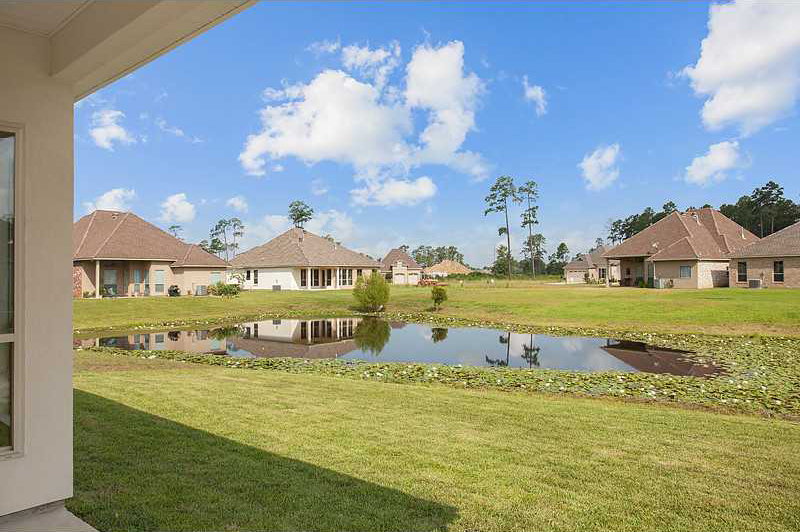
11-105-st-calais-exterior-rearIn the past 10 years, new single-family and multi-family structures are trending more energy efficient, spending less energy and emitting fewer greenhouse gases.  During the 1950’s and 1960’s, the United States started to really develop huge residential sections of cities and towns.  Neighborhoods and subdivisions began to pepper the landscape with many houses in a row.  These homes typically had unique and open façade with front porches and tree-lined sidewalks for neighbors to spend time outdoors and interact with each other.  Subdivisions and communities today are harkening back to these times by building what developers are calling Traditional Neighborhood Developments (TND’s), master planned communities with a town center and homes built with rear alleys for rear-entry and side-entry garages.  Because of the types of homes that were built in the 1950’s to 1980’s, the homes tended to be smaller but did not have the advantage of the energy efficient, green building techniques of modern-day builders.

Beginning at the end of the 1980’s, builders started building single-family residences that were much larger than previously built homes.  These homes were more sprawling, typically had two stories and more square footage.  These homes consumed a lot of energy and emitted more greenhouse gases.  At the end of the 1990’s, the National Association of Home Builders started a program that focused on green building techniques.  And, during 2000 – 2009, the homes that are built are still larger than homes built decades ago, but they consume less energy and emit less greenhouse gases.

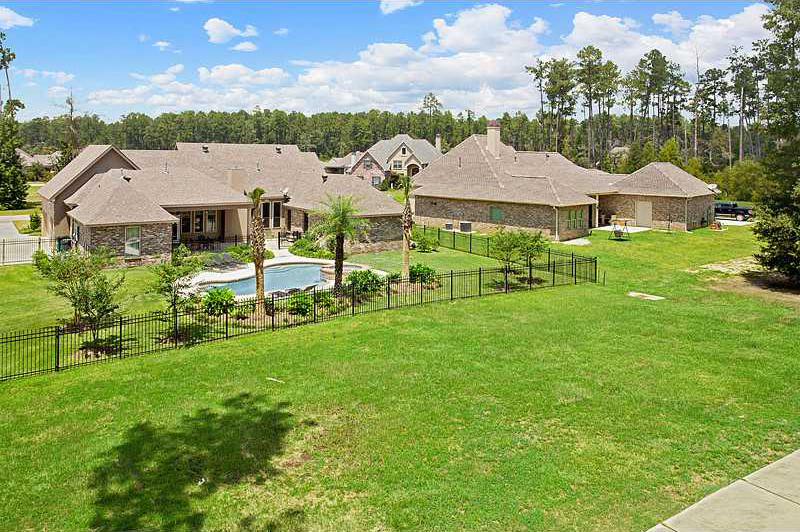
19-216-merion-circle-exterior-rearSpecifically, residential construction of single-family and multi-family homes from 2000 – 2009 consume 22% of the total energy consumed on the grid in the United States, and they are accountable for 18% of the greenhouse gases that are currently expelled.  Many buildings at Bedico Creek Preserve are highly experienced in building green with energy efficient techniques.  Also, Bedico Creek Preserve values the conservation of energy and the promotion of a natural environment by developing our lots and building our homes into the surrounding greenscapes instead of clear-cutting the land to make room for new homes.  That is the reason that buyers who purchase a home in our subdivision in St. Tammany Parish enjoy not only the acreage on their lot but also the surrounding 500 acres of green spaces, lakes and waterways, and even a wildlife habitat.  If you are a conservationist at heart and want to commune with nature each and every day where you live, Contact Bedico Creek to take a tour of our Neighborhoods.  Call 985-845-4200 or E-mail Info@LiveBedico.com.

Click Here for the Source of the Information.